
How long it takes to get traffic from Pinterest depends on how consistently you pin and how well-optimized your content is, but most bloggers see their first clicks within 2 to 4 weeks, meaningful consistent traffic between months 3 and 6, and real compounding growth after 12 months. Pinterest is a search engine. Results build slowly, then all at once.
You have been pinning every day for three weeks. Your impressions are climbing, your follower count has not moved, and your blog traffic from Pinterest is basically zero. You start wondering if you are doing something wrong or if the whole platform is a waste of time.
Neither of those things is true. What you are experiencing is the normal Pinterest timeline, and almost every blogger who eventually gets serious traffic from Pinterest went through the same invisible stretch first. How long it takes to get traffic from Pinterest is one of the most frequently asked questions in the blogging community, and the honest answer is: longer than most people expect, but more sustainable than almost any other platform once it kicks in.
This post breaks down what to realistically expect at each stage and why the slow start is actually how Pinterest is supposed to work.
Want a clear system for getting Pinterest traffic faster?
The PinFlow Blueprint walks you through the exact process for building a Pinterest presence that drives consistent blog traffic, step by step. No guesswork. Get the PinFlow Blueprint →
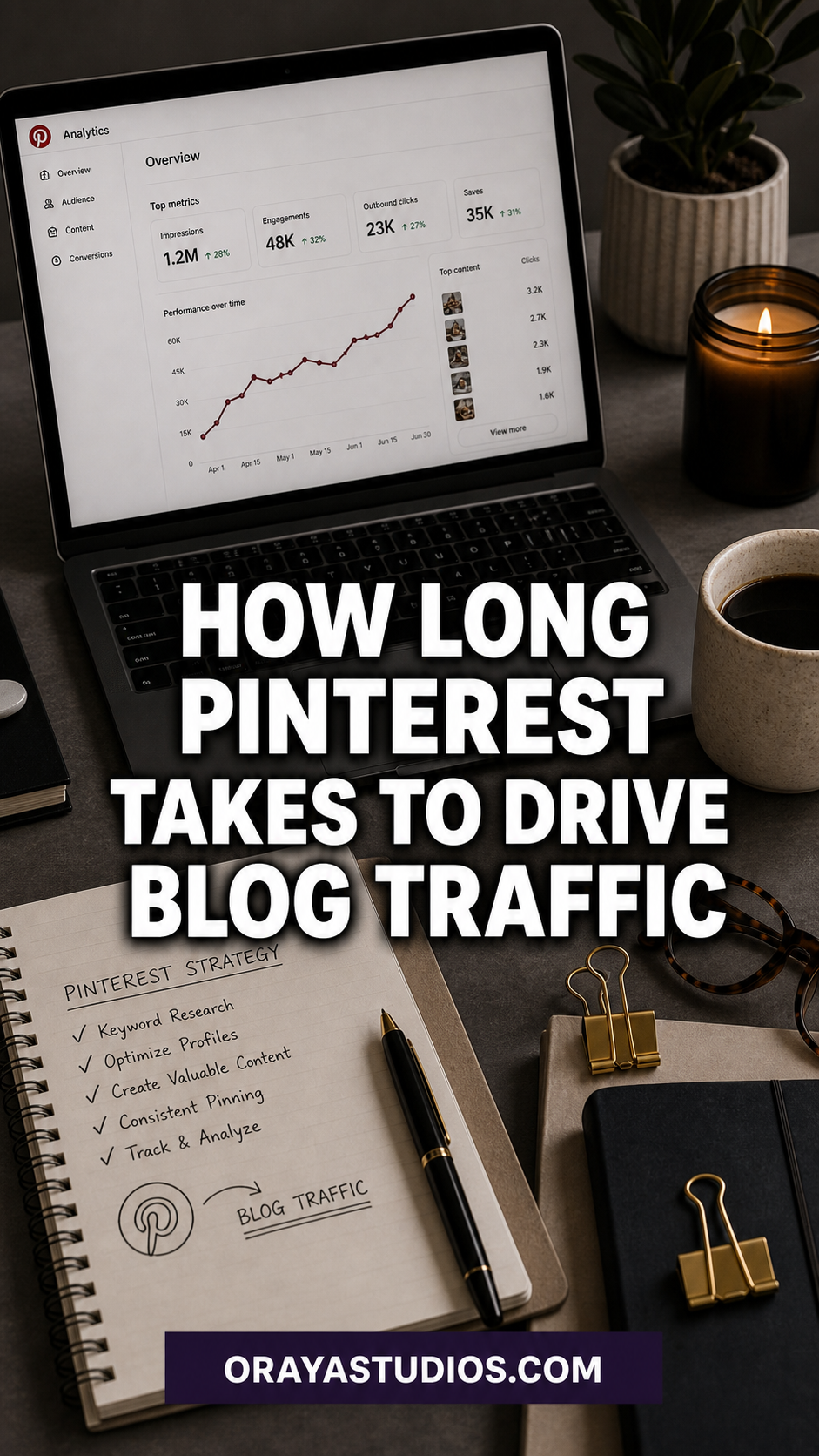
Why Pinterest Takes Longer Than Other Platforms
Most social platforms work like a feed. You post something, it appears in front of your followers for a few hours, and then it is buried. If you want reach, you need to post again tomorrow. Pinterest works completely differently.
Pinterest is a search engine. When you post a pin, Pinterest indexes it, evaluates it against relevant keywords, and then decides where and when to surface it in search results. That indexing process does not happen instantly. It takes days to weeks for a new pin to get picked up, evaluated, and distributed. And unlike a social post, a pin that performs well keeps showing up in search results for months or years.
This is why the early phase feels so empty. You are not watching your content fail to perform. You are watching it get indexed. The traffic that is coming is queued up, waiting for Pinterest to surface those pins in the right searches at the right time. Understanding Pinterest SEO basics helps you optimize for that indexing process from the start, rather than discovering it after six months of suboptimal pins.
The Pinterest Traffic Timeline Month by Month
Weeks 1 to 4: Impressions start appearing. Your pins are being indexed and shown to small test audiences. Do not expect clicks yet. This is the setup phase. Pinterest is learning your niche, your keywords, and what kind of content you produce.
Month 2 to 3: You should see your first consistent clicks. They will be small, probably between 50 and 200 sessions per month from Pinterest. Some of your earlier pins will start gaining traction in search, especially if you used specific, low-competition keywords. This is when you get the first real signal that your strategy is working.
Month 3 to 6: This is the growth phase. Traffic from Pinterest often doubles or triples between months three and six as earlier pins accumulate engagement signals and rank higher in search. Accounts that pinned consistently through the invisible first two months start seeing the payoff here. Those who gave up at month two missed this entirely.
Month 6 to 12: Steady, compounding growth. Your pinning history starts working for you. Older pins keep sending traffic. New pins get distributed faster because your account has established trust signals. Some accounts hit their first 10,000 monthly sessions from Pinterest in this window.
Beyond 12 months: This is where the passive income side of Pinterest becomes real. Pins from 18 months ago can still be driving daily clicks. Your account has momentum. Adding new content accelerates the growth that is already happening rather than building from zero.
What Normal Looks Like in Your First 90 Days
Most bloggers go through the same stages in the first three months. Knowing what is normal helps you stay consistent through the stretch that most people quit.
In the first 30 days, impressions are your primary metric. Getting 1,000 to 5,000 impressions per month on a brand new account is completely normal. Clicks will be minimal. A handful per week is a good sign, not a disappointment.
In the second month, you start to see which keywords are gaining traction. Some pins will have clearly outperformed others. This is data you can use to improve your keyword targeting on new pins. Clicks should be edging upward.
By the end of month three, most accounts with a consistent pinning schedule and decent keyword optimization will be generating somewhere between 100 and 500 monthly sessions from Pinterest. That number feels small, but the trajectory from here forward is steep if you keep going. The accounts that see 5,000 monthly Pinterest sessions at month twelve are almost always the ones who kept posting consistently through months one and two when nothing seemed to be working.
What Speeds Up or Slows Down Your Pinterest Results
Not all Pinterest timelines are equal. Several factors can significantly accelerate or delay when you start seeing real traffic.
Keyword optimization is the single biggest lever. Pins with specific, searchable keywords in the title and description get indexed faster and rank in more relevant searches. Vague pin titles slow everything down. A pin titled “My Favorite Recipe” will never rank. A pin titled “Easy 20-Minute Chicken Stir Fry for Busy Weeknights” has clear keyword signals and a reason for someone to click.
Pin design affects click-through rates, which affect distribution. Pinterest distributes content that earns engagement. Pins that stop the scroll and drive clicks get surfaced more broadly. Ugly or generic designs suppress your distribution regardless of keyword quality.
Posting consistency is the third major factor. Accounts that post daily get indexed more frequently than accounts that post occasionally. How many pins you post per day matters less than whether you post every single day. A scheduler handles this automatically. An account with 180 consecutive days of posting will dramatically outperform one that posted 500 pins inconsistently over the same period.
Niche competition also plays a role. Highly competitive niches take longer to break into because established accounts already dominate the main keywords. Targeting long-tail, specific keywords reduces competition and gets you indexed faster. The full guide to increasing Pinterest traffic covers the keyword strategy side in more detail.
How to Stay Consistent When Results Feel Invisible
The hardest part of Pinterest is the first two months. You are putting in work every day with almost no visible return. Most people give up here, which is exactly why the people who do not give up eventually dominate their niche on the platform.
The most practical thing you can do is automate the consistency. Set up a Tailwind queue, batch your pin creation every week, and let the scheduler run. When pinning is not a daily manual decision, it is much easier to stay on track through the invisible stretch.
Track impressions, not clicks, in the first 90 days. Impressions growing week over week means your pins are being indexed and shown to more people. That is a real signal of progress even before clicks materialize. Clicks follow impressions, usually with a delay of several weeks.
The long-term payoff of Pinterest is genuinely different from other platforms. A post that drives 500 sessions per month on Pinterest will often keep doing that for two to three years with no additional promotion. That is the passive income angle of Pinterest that most people only discover after they push through the initial slow period.
Ready to stop guessing and start building a real Pinterest traffic system?
The Blog Traffic Booster via Pinterest mini-course shows you exactly how to set up a pinning system that grows your sessions month over month, even when you are not actively working on it. Get the Blog Traffic Booster →
Frequently Asked Questions
Is it normal to get zero Pinterest traffic for the first month?
Yes, completely normal. The first month is the indexing phase. Pinterest is cataloguing your content, evaluating your keywords, and building a picture of what your account is about. Most new accounts see impressions growing before clicks appear, and clicks before meaningful traffic sessions. Zero sessions in month one does not indicate a problem. It indicates a start.
How long before a pin shows up in Pinterest search?
A fresh pin typically gets picked up and indexed within a few days to two weeks. It may start appearing in small amounts of relevant search traffic within that window. However, meaningful ranking in competitive searches takes longer, often 45 to 90 days as Pinterest gathers engagement signals and evaluates the pin against others competing for the same keywords. Some pins break through quickly; others take months before they find their audience.
What should I expect from Pinterest in months 1, 3, and 6?
Month 1: Impressions growing, minimal to no clicks, account getting indexed. Month 3: First consistent clicks, early traffic traction, 100 to 500 monthly sessions if you pinned consistently. Month 6: Compounding growth, older pins gaining momentum, early pins working as evergreen traffic sources. Following a solid Pinterest marketing strategy from the start compresses this timeline and produces better results at each stage.
Does Pinterest work faster for established blogs vs new ones?
Yes, somewhat. An established blog with domain authority and existing content gives Pinterest more signal about what your site covers. Pins linking to well-structured, existing blog posts tend to get better engagement than pins linking to brand new pages with no performance history. However, Pinterest mostly evaluates the pin itself, not the domain, so the quality of your pin titles, descriptions, and designs still matters more than how old your blog is.
How many pins do I need before seeing results?
There is no specific pin count threshold, but consistency over time is what generates results. Accounts that post 5 to 10 fresh pins per day for 90 days are giving Pinterest a lot of content to index and a lot of keyword signals to evaluate. More content means more chances to rank in relevant searches. The quality of your keyword targeting matters as much as the volume. A well-optimized pin to a specific topic can drive clicks from week two. A poorly targeted one can sit dormant for months.
Key Takeaways
- First clicks usually appear within 2 to 4 weeks. Consistent monthly traffic builds between months 3 and 6. Compounding growth starts after 12 months of consistent pinning.
- Pinterest is a search engine. Pins get indexed over days and weeks, not hours. The slow start is the indexing phase, not failure.
- Zero traffic in month one is normal. Track impressions in the early phase. Growing impressions means your content is being indexed and distributed.
- Keyword optimization, pin design quality, and posting consistency are the three biggest factors that speed up or slow down your results.
- Accounts that push through the invisible first two months are the ones that dominate Pinterest in their niche by month twelve.
- Pinterest traffic compounds over time. A pin that performs well today can keep driving traffic for months or years without additional promotion.
Final Thoughts
How long it takes to get traffic from Pinterest is longer than most people want to hear, but the payoff is different from any other platform. You are building a search presence that compounds. Every pin you post today is an asset that can drive traffic next year. Most content platforms cannot make that claim.
Stay consistent for 90 days. Use specific keywords. Post fresh pins daily. Then check your analytics and compare month one to month three. The difference is usually enough to make it very clear why this platform is worth the patience.